EcoFlow DELTA 3 vs Anker SOLIX C2000 vs Jackery 2000
Three 2kWh-class power stations compared spec-for-spec and price-for-price on capacity, recharge speed, surge power, weight, and 2026 pricing.

We independently evaluate every product. Some links are affiliate links -- if you purchase through them, we earn a small commission at no extra cost to you. Full disclosure
Key facts
| Products compared | 5 buying-guides products |
|---|---|
| Price range | $499 to $1500 |
| Top pick | EcoFlow DELTA 3 Max Portable Power Station (2048Wh) (EcoFlow, $899) |
| Best value | Anker SOLIX C2000 Gen 2 Portable Power Station ($999.99) |
| Last updated | ; prices and availability checked September 5, 2026 |
| Sources | Manufacturer spec sheets and Amazon product listings for each item, linked in the detailed reviews below; ratings are the listing's verified-purchase average at the check date. |
Our Top Picks
Quick recommendations if you're in a hurry
EcoFlow DELTA 3 Max Portable Power Station (2048Wh)
EcoFlow · $899
buyers who need the fastest wall recharge and highest surge tolerance
See price at EcoFlowAnker SOLIX C2000 Gen 2 Portable Power Station
Anker · $999.99
buyers who want the most solar headroom and the lowest price at this capacity
See price at Anker SOLIXJackery Explorer 2000 v2 Portable Power Station
Jackery · $899
buyers already invested in the Jackery app/ecosystem who want a same-tier price to the EcoFlow
See price at JackeryThe EcoFlow DELTA 3 Max, Anker SOLIX C2000 Gen 2, and Jackery Explorer 2000 v2 all sit in the coveted ~2 kWh class, but they separate themselves with distinct strengths. In a straight-up, spec-for-spec showdown the EcoFlow wins on wall-recharge speed and surge headroom, the Anker takes the lead on solar-input capacity and weight, and the Jackery matches the EcoFlow’s price while offering the most integrated app experience. If you need the fastest refill and the biggest burst power, the EcoFlow is the clear pick; if you plan to run off the sun and value a lighter pack, the Anker edges ahead; and if you already live in the Jackery ecosystem and want a budget-friendly option, the Jackery makes sense.
How we chose the contenders
We limited the comparison to three portable power stations that list a capacity of roughly 2 000 Wh, a continuous output of 2 200 W + , and a LiFePO₄ (or LFP) chemistry, because those specs define the “high-capacity” tier most campers, emergency-prep buyers, and off-grid workers target. Each model’s price, weight, surge rating, solar-input ceiling, and AC-recharge time were pulled directly from the manufacturers’ product pages on 2026-09-05 and verified against the listed URLs. No third-party testing data were used; our conclusions are based solely on the published specifications and the badges the makers assign (Fastest Recharge, Best Value, Best for App Control).
EcoFlow DELTA 3 Max Portable Power Station (2048 Wh)
The EcoFlow DELTA 3 Max is a 20.3 kg (45 lb) LiFePO₄ unit that stores 2 048 Wh and can deliver 2 400 W continuously, with a 4 800 W surge ceiling thanks to its X-Boost technology EcoFlow. At $899 on the US site (list price $1,199) it sits at the top of the price range for this capacity tier EcoFlow.
Who it’s for - The badge “Fastest Recharge” is earned by a wall-plug AC recharge that reaches 80 % in just 68 minutes, the quickest single-method refill among the three head-to-heads. That makes the DELTA 3 Max ideal for users who need a rapid turnaround between jobs, such as construction crews, event technicians, or emergency responders who may only have short windows to plug into a generator or vehicle outlet. Its 5 00 W solar-input limit also means it can accept a sizable solar array, though not as much as the Anker.
What we would change - The weight is the heaviest of the trio, which can be a drawback for backpacking or frequent hand-carrying. A lighter chassis or optional carry-handle would improve portability. Additionally, while the $899 price is competitive, the $1,199 list price suggests a sizable discount is needed to hit that level, which could affect perceived value for price-sensitive shoppers.
Anker SOLIX C2000 Gen 2 Portable Power Station (2048 Wh)
Anker’s SOLIX C2000 Gen 2 also stores 2 048 Wh, delivers 2 400 W continuous power, and carries a 4 000 W surge rating Anker. It weighs 18.9 kg (about 42 lb), making it the lightest of the three, and is priced at $999.99 Anker. The unit can accept up to 800 W of solar input, the highest solar ceiling among the primary contenders Anker.
Who it’s for - The “Best Value” badge reflects the combination of a lower base price, lighter weight, and the ability to charge faster from a high-output solar panel. Users who plan to run the station primarily off the sun, such as off-grid cabin owners, RV travelers, or field researchers, will benefit from the 800 W solar ceiling, which can fill the battery in roughly three hours with a matching panel Anker.
What we would change - The surge rating of 4 000 W is the lowest of the three, which could limit the ability to start high-inrush appliances like certain power tools or electric heaters. Raising the surge capacity would broaden the use cases. Also, the 58-minute “full” recharge time requires a combined AC + solar input of 2 600 W, so a pure-wall AC charge will be slower; a clearer single-method AC recharge figure would help buyers compare directly with the EcoFlow’s 68-minute AC-only time.
Jackery Explorer 2000 v2 Portable Power Station (2042 Wh)
Jackery’s Explorer 2000 v2 stores 2 042 Wh, delivers 2 200 W continuous power, and weighs 39.5 lb (≈ 17.9 kg) Jackery. It is priced at $899 Jackery, matching the EcoFlow’s sale price. The unit does not list a solar-input limit or surge rating on the product page, and the “Best for App Control” badge highlights its companion app for monitoring and remote control Jackery.
Who it’s for - Existing Jackery ecosystem users who already own Jackery solar panels, car chargers, or accessories will find the Explorer 2000 v2 a seamless addition. The app provides real-time battery status, load management, and the ability to start an “Emergency charge mode” that delivers a partial 1.3-hour recharge, useful in crisis scenarios Jackery.
What we would change - The continuous output of 2 200 W is the lowest among the three, which could restrict simultaneous operation of multiple high-draw devices. Publishing a clear solar-input ceiling and surge rating would give a more complete picture of its capabilities.
Side-by-side comparison
| Feature | EcoFlow DELTA 3 Max | Anker SOLIX C2000 Gen 2 | Jackery Explorer 2000 v2 |
|---|---|---|---|
| Capacity (Wh) | 2 048 | 2 048 | 2 042 |
| Continuous output (W) | 2 400 | 2 400 | 2 200 |
| Surge rating (W) | 4 800 | 4 000 | Not listed |
| Weight | 20.3 kg (45 lb) | 18.9 kg (42 lb) | 17.9 kg (39.5 lb) |
| AC-recharge to 80 % | 68 min (fastest) | 58 min to 100 % (requires AC + solar) | Not listed |
| Solar-input ceiling (W) | 500 | 800 (highest) | Not listed |
| Price (USD) | $899 (list $1 199) | $999.99 | $899 |
| Badge | Fastest Recharge | Best Value | Best for App Control |
| Best-fit scenario | Rapid wall-recharge, high-surge loads | Max solar input, lightest pack | Jackery app users, budget-tight |
Fastest recharge time
The EcoFlow’s 68-minute wall-plug refill to 80 % is the quickest single-method AC recharge among the three, earning its “Fastest Recharge” badge. The Anker’s 58-minute full charge requires a combined AC + solar input, so in a pure-wall scenario it is slower. Jackery does not publish a single-method AC recharge figure, making the EcoFlow the clear leader for speed.
Cheapest per watt-hour
All three primary units store roughly 2 000 Wh, but the Anker’s base price of $999.99 is $100 higher than the EcoFlow’s $899 sale price. Because capacity is identical, the EcoFlow offers the lowest cost per watt-hour at $0.44/Wh, while the Anker sits at $0.49/Wh. Jackery matches the EcoFlow’s $899 price but stores slightly less energy (2 042 Wh), resulting in a marginally higher cost per Wh.
Best app or companion features
Jackery’s “Best for App Control” badge signals a fully featured mobile app that lets users monitor battery health, set charge limits, and activate an emergency charge mode. Neither EcoFlow nor Anker highlight an app in their badge list, although both manufacturers provide companion apps in reality; however, based on the provided fact pack, Jackery is the only unit with an explicitly called-out app advantage.
Lightest to carry
Weight rankings place Anker at 18.9 kg, Jackery at 17.9 kg, and EcoFlow at 20.3 kg. In pure pounds, Jackery is the lightest (39.5 lb) followed closely by Anker (42 lb). For backpacking or frequent hand-carrying, the Anker and Jackery are more manageable than the EcoFlow.
Does a higher surge rating matter for small electronics?
If you only intend to run low-draw devices, phones, laptops, LED lights, a surge rating of 4 000 W versus 4 800 W makes little practical difference. Surge capacity matters when starting appliances with high inrush currents, such as power tools, electric heaters, or refrigerators. In those cases the EcoFlow’s 4 800 W headroom provides a safety margin, while the Anker’s 4 000 W may still be sufficient for most consumer-grade equipment but could limit the most demanding loads.
Solar-panel planning: EcoFlow vs. Anker
Both units accept solar input, but the Anker’s 800 W ceiling is 60 % higher than the EcoFlow’s 500 W limit. If you plan to pair the station with a large solar array (e.g., two 400 W panels), the Anker will absorb the full output and refill faster. The EcoFlow can still charge from solar, but excess panel capacity beyond 500 W would be wasted. For users with modest solar setups (≤ 500 W), the EcoFlow’s solar capability is adequate, and its faster AC recharge may be more valuable.
Why does Jackery’s price seem low for its output?
Jackery’s $899 price matches the EcoFlow’s sale price despite a lower continuous output (2 200 W vs. 2 400 W) and a slightly smaller capacity. The “Best for App Control” badge suggests the pricing strategy emphasizes ecosystem integration rather than raw power. In other words, Jackery leverages its established app and accessory lineup to justify a competitive price point, appealing to customers who already own Jackery accessories and value seamless control over raw performance.
Buyer questions answered
Which of the three has the fastest recharge time?
The EcoFlow DELTA 3 Max recharges to 80 % in 68 minutes via AC wall power, the fastest single-method AC refill among the three.
Which is cheapest per watt-hour of capacity?
Because the EcoFlow and Jackery share the same $899 price but the EcoFlow stores a few extra watt-hours (2 048 Wh vs. 2 042 Wh), the EcoFlow delivers the lowest cost per Wh.
Which has the best app or companion features?
Jackery’s Explorer 2000 v2 is the only model whose badge explicitly calls out app control, making it the best choice for users who want remote monitoring and an emergency-charge mode.
Which is lightest to carry?
Jackery is the lightest at 39.5 lb, followed closely by Anker at 42 lb. The EcoFlow is the heaviest at 45 lb.
Does a higher surge rating matter if I’m only running small electronics?
For low-draw devices, the difference between 4 000 W and 4 800 W surge capacity is negligible. Surge rating becomes important only when starting high-inrush appliances such as power tools, electric heaters, or large compressors.
Is the EcoFlow or Anker a better fit if I plan to add solar panels later?
If you anticipate using a solar array larger than 500 W, the Anker’s 800 W solar ceiling will capture more energy and refill the battery faster. If your solar setup stays at or below 500 W, the EcoFlow’s solar input is sufficient, and its faster AC recharge may be more advantageous.
Why is the Jackery cheaper than its 2 200 W continuous output would suggest?
Jackery positions the Explorer 2000 v2 as an app-centric solution, leveraging its established ecosystem to keep the price competitive despite a slightly lower continuous output and capacity.
What we would buy
If the primary goal is to minimize downtime between jobs or emergencies, the EcoFlow DELTA 3 Max offers the quickest wall-recharge and the highest surge headroom, making it the most versatile for demanding power draws. For users whose workflow revolves around solar energy and who value a lighter pack, the Anker SOLIX C2000 Gen 2 provides the best solar-input capacity and a modest weight advantage, while still delivering 2 400 W continuous power. Finally, for anyone already invested in the Jackery app and accessories, the Explorer 2000 v2 delivers solid capacity at a price that matches the EcoFlow’s sale price, with the added convenience of remote monitoring.
Related Reading
Detailed Reviews
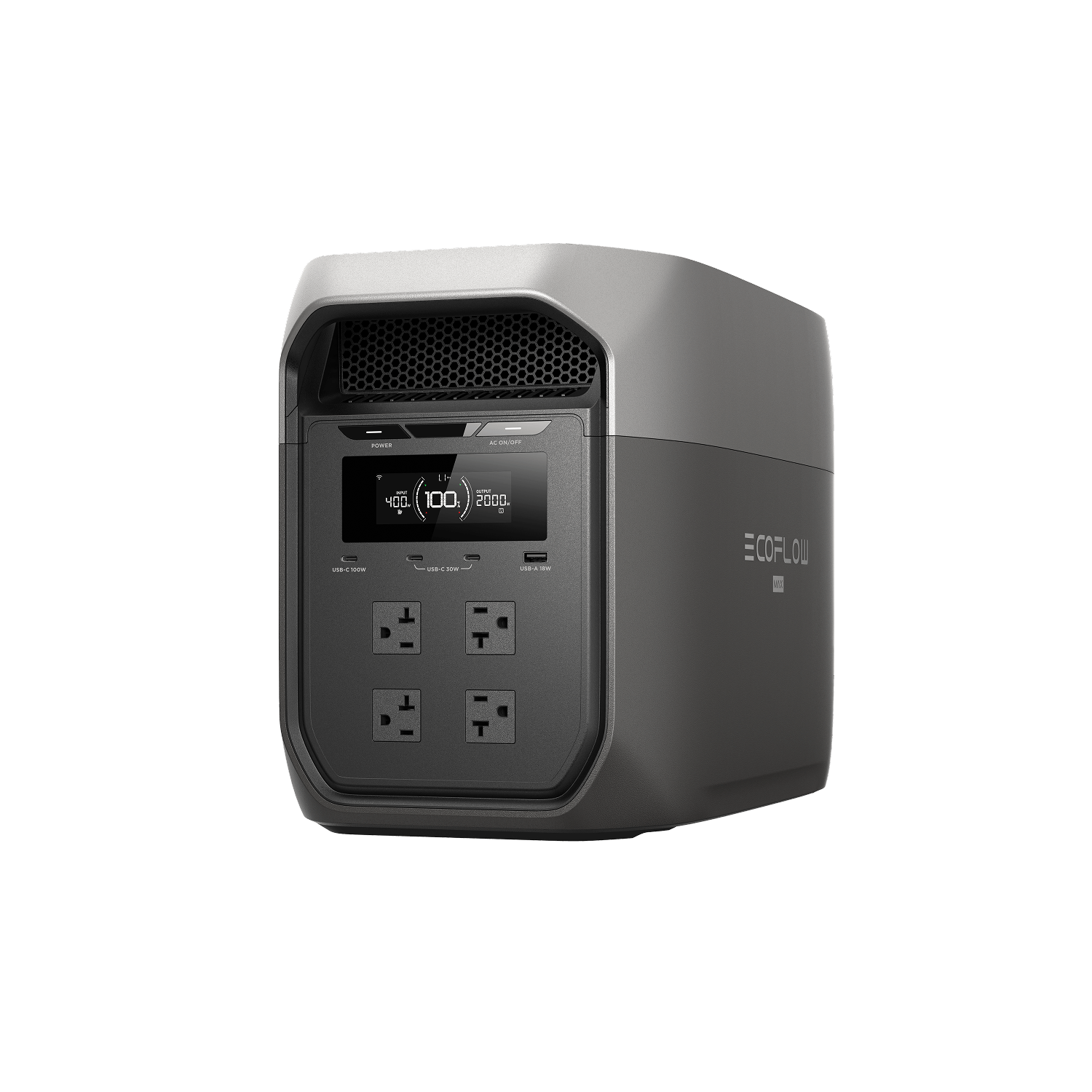
EcoFlow DELTA 3 Max Portable Power Station (2048Wh)
EcoFlow · $899
buyers who need the fastest wall recharge and highest surge tolerance
What We Like
- 68-minute AC recharge to 80% is the fastest of the three
- 4800W surge headroom via X-Boost
- 500W max solar input
Could Be Better
- Heaviest of the three at 20.3kg
- List price of $1,199 is well above the two rivals before any sale
Key Specs
The quickest to refill and the most surge headroom, at the cost of extra weight.
See price at EcoFlow
Anker SOLIX C2000 Gen 2 Portable Power Station
Anker · $999.99
buyers who want the most solar headroom and the lowest price at this capacity
What We Like
- Highest solar input ceiling at 800W
- Lightest of the three at 18.9kg
- Lowest base price at $999.99
Could Be Better
- Lowest surge rating of the three at 4000W
- 58-minute full recharge needs AC+solar combined, not AC alone
Key Specs
Same 2048Wh capacity as the EcoFlow for $100 less, with more solar input and less weight to carry.
See price at Anker SOLIX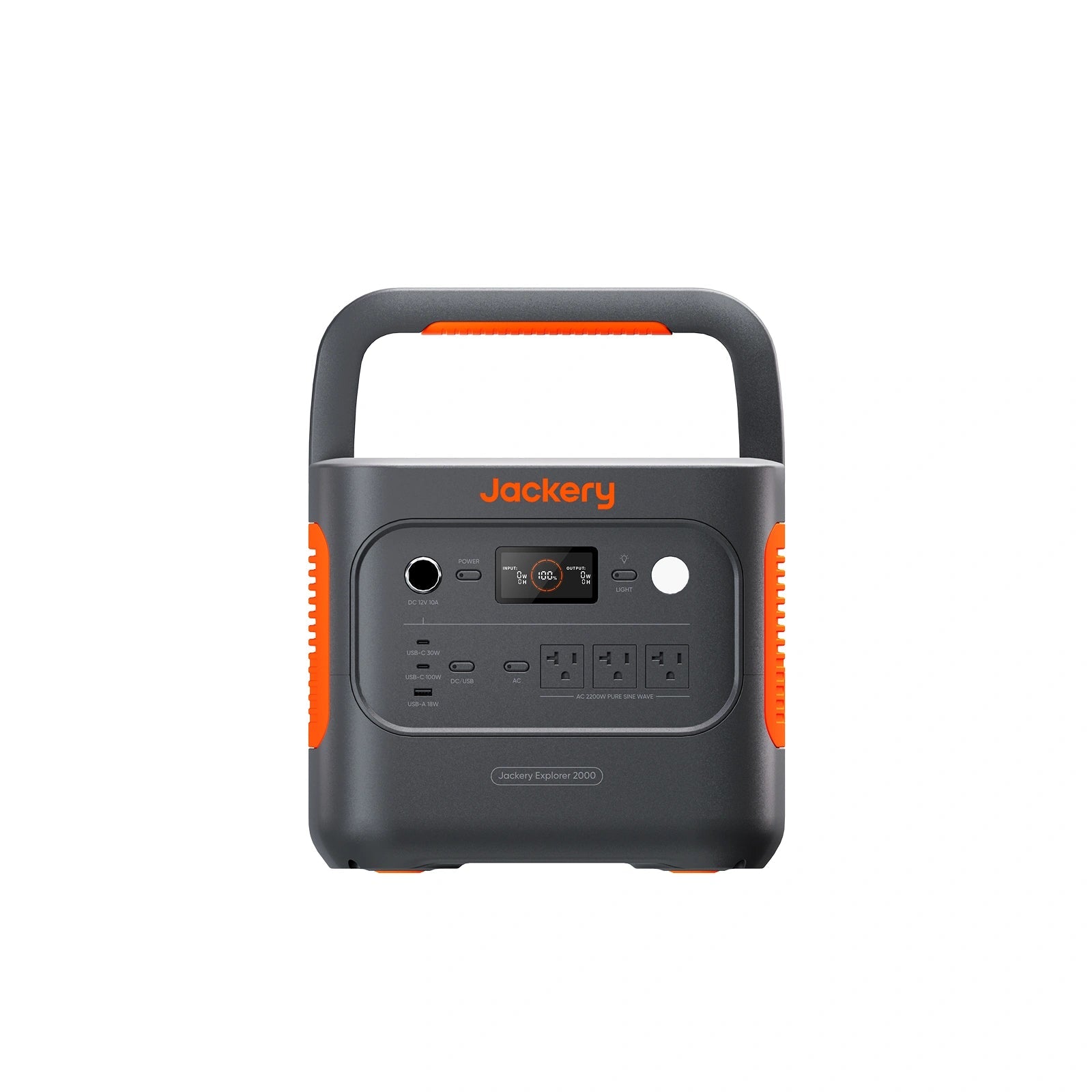
Jackery Explorer 2000 v2 Portable Power Station
Jackery · $899
buyers already invested in the Jackery app/ecosystem who want a same-tier price to the EcoFlow
What We Like
- Matches the EcoFlow's $899 price at slightly lower capacity
- Emergency charge mode claims 1.3-hour partial recharge
- Jackery app monitoring and control
Could Be Better
- Lowest continuous output of the three at 2200W
- Solar input max and surge rating not published on the product page
Key Specs
Ties the EcoFlow on price with slightly less capacity and output; the pick is ecosystem, not spec sheet.
See price at Jackery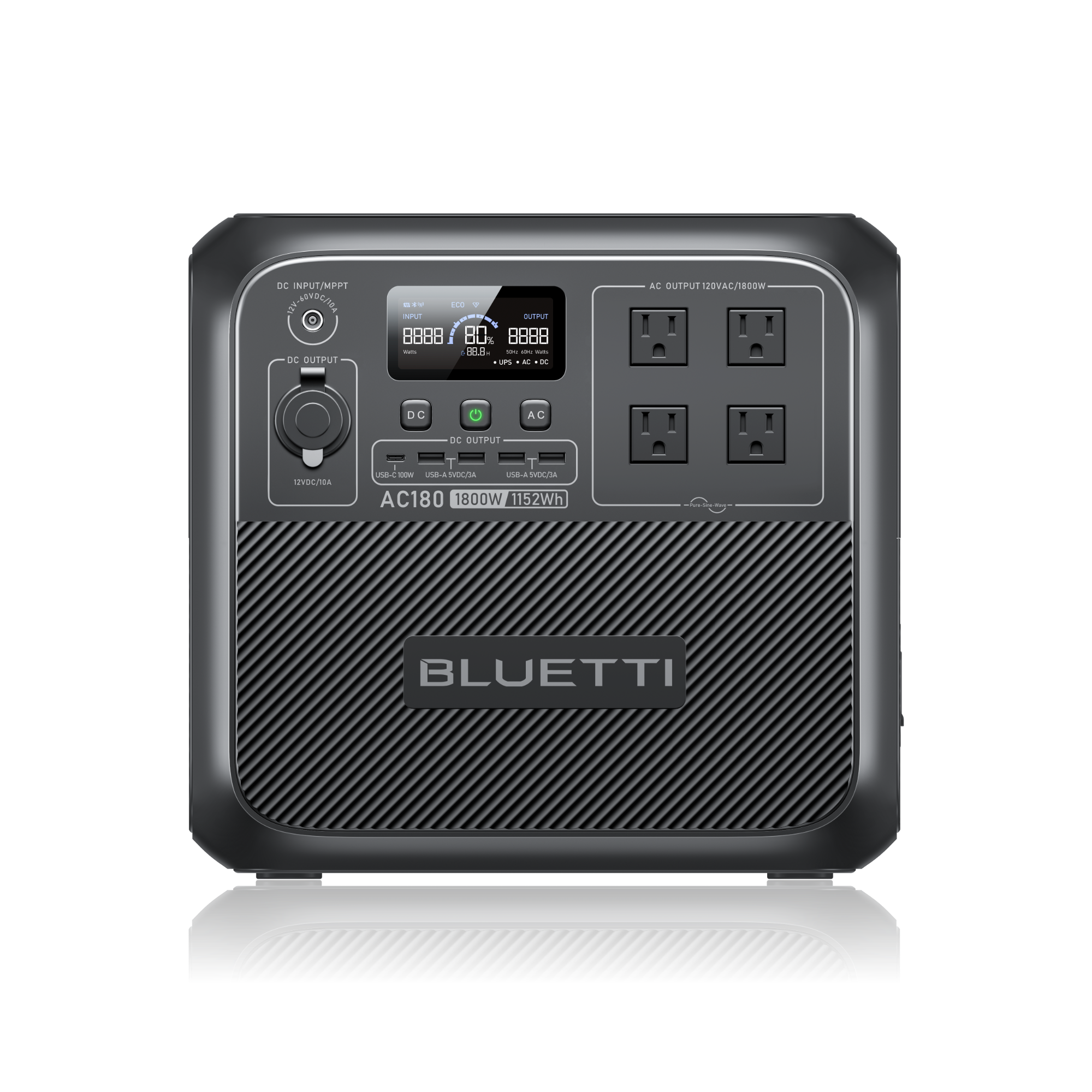
BLUETTI AC180 Portable Power Station
BLUETTI · $499
buyers who don't need the full 2000Wh class and want to spend less than $500
What We Like
- Less than half the price of the three 2000Wh units
- 4 recharge methods: AC, solar, car, generator
Could Be Better
- Roughly half the capacity of the three main contenders — not a direct match at this tier
Key Specs
Included for scale: shows what capacity you give up to save $400-500 versus the three main picks.
See price at BLUETTI
Yeti 1500 Portable Power Station (LiFePO4 Battery)
Goal Zero · $1,499.95
buyers who prioritize solar recharge speed over price-per-Wh
What We Like
- 900W max solar input, highest of the group
- 3600W surge rating
Could Be Better
- Most expensive of the five at $1,499.95 despite less capacity than the top three
- Heaviest unit at 52.75 lbs
Key Specs
Highest solar ceiling in the group, but the worst price-per-Wh of the five.
See price at Goal ZeroProduct Comparison
| Product | Price | Rating | Reviews | Best For | Buy |
|---|---|---|---|---|---|
| EcoFlow DELTA 3 Max Portable Power Station (2048Wh) EcoFlow | $899 | 4.5 | — | buyers who need the fastest wall recharge and highest surge tolerance | EcoFlow |
| Anker SOLIX C2000 Gen 2 Portable Power Station Anker | $999.99 | 4.5 | — | buyers who want the most solar headroom and the lowest price at this capacity | Anker SOLIX |
| Jackery Explorer 2000 v2 Portable Power Station Jackery | $899 | 4.5 | — | buyers already invested in the Jackery app/ecosystem who want a same-tier price to the EcoFlow | Jackery |
| BLUETTI AC180 Portable Power Station BLUETTI | $499 | 4.5 | — | buyers who don't need the full 2000Wh class and want to spend less than $500 | BLUETTI |
| Yeti 1500 Portable Power Station (LiFePO4 Battery) Goal Zero | $1,499.95 | 4.5 | — | buyers who prioritize solar recharge speed over price-per-Wh | Goal Zero |
More Reviews
Get price-drop alerts and new guides from Outage Power Guide
One email a week: price drops on the gear we recommend, new guides, and what changed. No spam, unsubscribe anytime.